Have you ever tried to open a key document, only to find your software won’t recognize it? Whether it’s complex contracts, detailed spreadsheets, or important presentations, you need a reliable tool for your digital papers. The right pdf format converter can save you hours by keeping your files open on any device.
Today’s work demands flexibility, and keeping the original layout and content is vital. Efficiency is key when deadlines are tight. This guide compares the best methods for privacy, features, and troubleshooting at home and work. The right choice keeps your data safe and ensures quality in every document you share.
Key Takeaways
- Identify the best tools for handling contracts, images, and spreadsheets.
- Learn how to maintain document layout and font integrity during processing.
- Understand the importance of data privacy and secure file handling.
- Discover how to use OCR technology for scanned or non-editable pages.
- Compare free versus paid options to find the right fit for your needs.
Why a Reliable PDF Format Converter Matters
When you need accurate documents every day, your conversion tools must be top-notch. Bad software can really slow you down, whether you’re racing against time or handling confidential info.
Picking a PDF converter software that’s reliable means your documents will look professional. This is key for reports or legal documents, keeping your credibility intact.
Common problems with slow or inaccurate file conversion
Unreliable tools can mess up your files, causing text to jumble, images to vanish, or layouts to break. This means you’ll have to fix these problems manually, wasting time.
Slow conversion speeds can also slow you down, making it hard to work on lots of files. If you’re facing these problems, learning how to convert PDF to Word without losing quality might help keep your documents looking good.
When PDF conversion becomes part of a daily workflow
For many, converting documents is a daily task. It’s needed for invoices, contracts, and tax forms. A good PDF conversion tool is essential.
Teams use these tools for presentations and sharing documents. Smooth conversions let your team focus on important tasks, not tech issues.
What users should expect from a dependable converter
A good converter does more than the basics. It should keep your formatting, fonts, tables, and layouts just as you set them.
Also, a great PDF conversion tool should work fast and be easy to use. You shouldn’t need to learn a lot to use it, as it should fit into your workflow smoothly.
What a PDF Format Converter Can Convert
A good conversion tool connects different file types, keeping your data accessible everywhere. Knowing what your software can do helps you work more efficiently. It also keeps your documents professional.
Turning Microsoft Word documents into polished PDFs
A Word to PDF converter keeps your formatting just right. This is great for things like resumes and reports where looks matter.
“The true power of a document lies in its ability to be read clearly by anyone, anywhere, without the fear of formatting errors.”
Converting Excel spreadsheets and PowerPoint presentations
An Excel to PDF converter makes data easy to read. A PowerPoint to PDF converter keeps your slides looking good. But, animations and videos might not work in the final PDF.
Changing image files into searchable or shareable PDFs
An image to PDF converter is key for digitizing photos and more. It turns many images into one easy-to-share document.
Exporting PDFs into editable Word, Excel, and image formats
Need to change a PDF back? A PDF to Word converter can help. It also works for PDF to Excel converter to make data easy to edit.
| Source Format | Target Format | Best Use Case |
|---|---|---|
| Word (.docx) | Finalizing reports | |
| Excel (.xlsx) | Sharing financial data | |
| Word (.docx) | Editing legacy text |
Choosing the right output format for the task
Remember, rich-text features might not always work right during conversion. Always check your document after converting. Sometimes, you need to clean up the formatting yourself.
Key Features to Look for in a PDF Format Converter
Choosing the right PDF converter is more than just picking a tool. It’s about finding one that fits your workflow perfectly. A good PDF to HTML converter should do more than just change file formats. It should work smoothly with your current digital tools.
Fast processing without sacrificing document quality
Top tools focus on PDF conversion speed and keeping your data safe. They should handle complex documents quickly. Efficiency is key, so you can focus on your main tasks.
Accurate formatting, fonts, tables, and page layouts
A good converter keeps your document looking the same. It should match fonts, keep tables right, and maintain page margins. If it doesn’t, you’ll spend a lot of time fixing it.
Batch conversion for multiple files
Batch PDF conversion is a big time-saver for those with lots of documents. It lets you convert many files at once. This is great for tasks like managing reports or archives.
OCR for scanned documents and image-based PDFs
An OCR PDF converter is essential for scanned or image-heavy PDFs. It turns these into text you can edit or search. This makes old scans useful again.
File size controls and compression options
Good PDF compression helps keep your files small. This makes them easier to share. Look for tools that let you adjust image quality and file size.
Support for common desktop and mobile file types
A versatile converter is important for professionals. It should work with many formats, including Microsoft Office and mobile files. This makes your tool useful on any device.
| Feature | Benefit | User Priority |
|---|---|---|
| Batch Processing | Saves time on bulk tasks | High |
| OCR Technology | Makes scans searchable | Medium |
| Compression | Reduces file storage | High |
| Format Support | Ensures compatibility | High |
How to Convert Files to PDF Quickly
Creating a high-quality document starts with preparation. Organize your work before converting it. This ensures your document looks professional and is easy to read.
Prepare the source file before uploading or opening it
Make sure your source document is clean and free of clutter. Remove hidden comments, track changes, and draft notes. This step keeps your document looking clean and polished.
Select PDF as the output format
When your file is ready, pick a reliable online PDF converter. Most tools let you drag and drop your file. Choosing the right output format keeps your document compatible with different platforms and devices.
Check page size, orientation, and quality settings
Review your PDF conversion settings before starting. Adjust page size and orientation to avoid formatting issues. High-quality settings ensure images and text are sharp and clear.
Start the conversion and monitor the processing status
After setting your preferences, start the conversion. Watch the progress bar. A secure PDF conversion process is usually quick. Don’t close your browser until it’s done.
Open the finished PDF and verify the result
When the download is ready, open the file. Check the layout and content. Make sure fonts are correct and nothing has moved. Catching errors early helps avoid sharing mistakes.
What to check when converting an important business document
Be extra careful with sensitive files like contracts or invoices. Here’s a checklist for professional documents:
- Verify all names and numerical totals for accuracy.
- Ensure that signatures and stamps are clearly visible.
- Check that the page order is correct and consistent.
- Test all hyperlinks to confirm they lead to the intended destinations.
- Confirm that the file opens correctly on both desktop and mobile devices.
How to Convert a PDF Into an Editable File
Turning a static PDF into an editable PDF is key in today’s digital world. PDFs are great for keeping layouts the same. But, they can be a problem when you need to make quick changes or updates.
Converting PDF files to Microsoft Word
Changing text or reformatting a document is easier in Microsoft Word. This method keeps the original text, letting you edit paragraphs, fix typos, and change fonts easily. Reliable converters help keep your document’s flow the same during this change.
Extracting tables from PDFs into Excel
For data analysis, moving info from a static report to a spreadsheet is helpful. Extracting tables works best if the document has clear rows and columns. Once in Excel, you can do calculations and change your data.
Saving PDF pages as JPG or PNG images
At times, you might want to share a document but not let others edit it. A PDF to JPG converter can turn specific pages into high-quality images. This is perfect for presentations or social media where visuals are more important than text.
Using OCR when the PDF contains scanned text
Optical Character Recognition, or OCR, is vital for scanned documents. It turns images into a searchable PDF that you can highlight and copy. Accuracy levels depend on how clear the original scan is.
Why scanned documents may require cleanup after conversion
Scanned files need careful handling after conversion. OCR might make small mistakes in spelling or spacing. Always check your document to fix headers, column alignment, and table structures for a polished look.
Protecting Documents During Online PDF Conversion
When you upload files for conversion, knowing how your data is handled is key for PDF privacy. Many online tools are convenient, but your information must stay safe throughout the process.
How secure file transfers and encrypted connections help
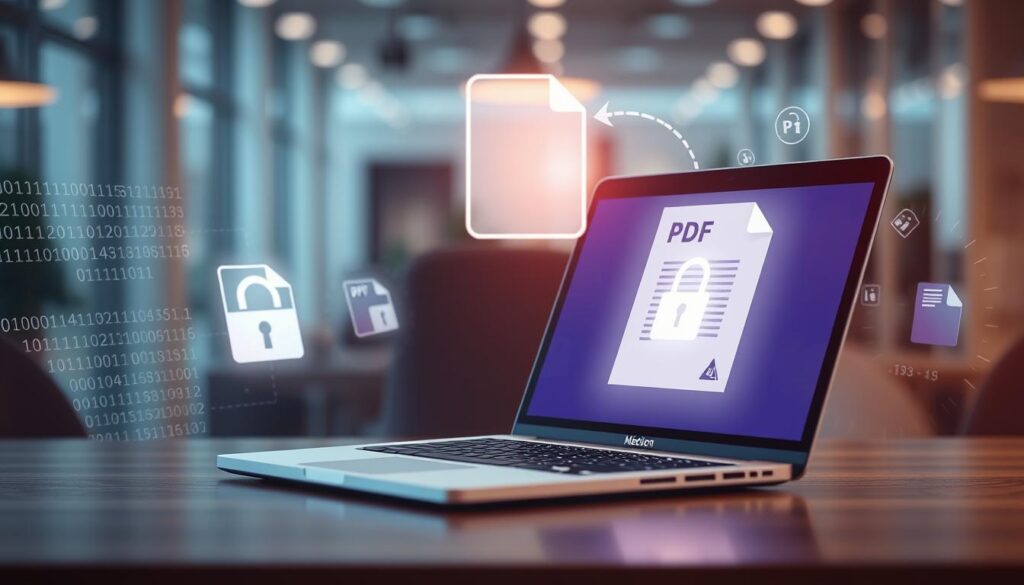
Reputable services use encrypted connections to keep your data safe as it moves between your device and their servers. This tech creates a digital tunnel, stopping others from getting your files during upload or download.
But, remember, security during transfer is just part of the story. An encrypted PDF conversion process scrambles your data in transit. Yet, you should also check how the provider handles your file once it’s on their platform.
Checking file retention and automatic deletion policies
Before you start, look at the provider’s privacy policy on file retention. Many services have automatic deletion, which removes your files from their servers soon after conversion.
Make sure the service clearly states it doesn’t store, index, or share your documents with others. If a website doesn’t say how it deletes files, it’s safer to pick a different service that values your data.
Handling tax forms, contracts, medical records, and other sensitive files
Some documents need extra care because of the sensitive info they hold. Tax forms, legal contracts, and medical records often have personal details that should be kept safe.
For these files, think if you really need to use an online service. If the content is very private, processing it locally is often the best way to manage your data.
When offline PDF conversion is the safer choice
An offline PDF converter offers the highest security by doing all work on your computer. This way, your file never leaves your local area, avoiding risks of internet transmission and cloud storage.
This method is great for those who deal with sensitive business data or personal records often. Using software on your computer lets you control your files from start to finish.
Practical steps for reducing privacy risks
To keep your info safe, follow these easy tips when converting documents:
- Always check if the website uses HTTPS for a secure, encrypted connection.
- Read the privacy policy to make sure files are deleted right after processing.
- Avoid uploading documents with social security numbers or banking details to public tools.
- Consider using an offline PDF converter for very sensitive or private information.
| Security Feature | Online Converter | Offline Converter |
|---|---|---|
| Data Transmission | Encrypted (HTTPS) | None (Local) |
| File Storage | Temporary/Cloud | None (Local Only) |
| Privacy Level | High (If Trusted) | Maximum |
| Accessibility | Anywhere | Device-Dependent |
Maintaining Quality After File Conversion
Converting a file is just the start of managing your documents. Many think a download is perfect right away. But, checking your output is key to keeping quality high. A quick review can catch mistakes before you share your work.
Preserving fonts, spacing, graphics, and hyperlinks
When converting, software must match the original elements to the new format. Always check that fonts look right and spacing is correct. Graphics should stay sharp, and hyperlinks must work as they should.
Keeping forms, signatures, and annotations usable
Interactive elements need extra care. Make sure form fields can be filled and digital signatures are interactive. Also, check that annotations and comments are clear and linked to the text.
“Quality is never an accident; it is always the result of high intention, sincere effort, intelligent direction and skillful execution.”
Balancing resolution and file size
Getting the best PDF conversion quality means balancing image quality and file size. High-quality images look great but can be hard to share. Use the table below to find the right settings for your needs:
| Document Type | Recommended DPI | Primary Goal |
|---|---|---|
| Text-heavy reports | 150 DPI | Small file size |
| High-quality brochures | 300 DPI | Visual clarity |
| Archival documents | 600 DPI | Maximum detail |
Making converted PDFs accessible and searchable
Creating an accessible PDF is key for everyone to use. Make sure OCR is used if the source was scanned. This lets screen readers read the text and makes searching easier.
Using text selection and zoom checks to catch conversion errors
Try to highlight and copy some text to check if it’s selectable. If it is, your document is likely good to go. Also, use the zoom tool to check small details, like fonts or graphics, to make sure they’re clear.
Choosing the Best PDF Format Converter for Your Needs
Finding the right tool is all about balancing speed, privacy, and features. Everyone has different needs, so there’s no one-size-fits-all solution. Knowing what each platform offers helps you make a smart choice.
Browser-based tools for occasional conversions
For those who convert files rarely, web-based tools are perfect. They work on any device with internet, making quick tasks easy. A free PDF converter online can handle simple changes without needing to install anything.
“The best tool is the one that fits seamlessly into your existing workflow without adding unnecessary complexity.”
Desktop software for frequent or private workflows
For those dealing with sensitive documents or lots of files, software is better. A strong desktop PDF converter keeps your files safe by not uploading them. If you use Apple devices, a PDF converter for Mac can work well with your system tools.
Mobile PDF converters for work away from the office
Today’s workers often need to manage documents on the go. A mobile PDF converter app lets you scan, convert, and share files from your phone or tablet. These apps are essential for staying productive outside the office.
Free and paid features worth comparing
Free versions are good for basic needs, but paid plans offer more for businesses. Think about if you need advanced features like OCR, batch processing, or bigger file limits. Here’s how different options stack up:
| Feature | Browser-Based | Desktop Software | Mobile App |
|---|---|---|---|
| Privacy | Moderate | High | High |
| Speed | Variable | Fast | Moderate |
| Advanced OCR | Limited | Comprehensive | Basic |
Questions to ask before committing to a conversion service
Before choosing a service or software, ask yourself these questions. Make sure it fits your needs long-term:
- Does the tool support the specific file formats I use most often?
- Are my sensitive documents handled with proper encryption and privacy protocols?
- Is the interface intuitive enough to save me time during my daily routine?
- Does the provider offer reliable customer support if a conversion fails?
Troubleshooting Common PDF Conversion Problems
When your document conversion doesn’t work out, a step-by-step approach can quickly find the problem. PDF conversion errors can be annoying, but they often stem from small formatting issues or file limitations. These are usually easy to fix.

Fixing missing text, changed fonts, or broken layouts
Missing text or shifted elements in your document usually point to a formatting issue in the original file. Complex layouts and non-standard fonts can cause problems when switching formats.
Try simplifying the source document by removing too many line breaks or unusual text boxes before converting. Ensuring that all fonts are embedded in the original file can also prevent unexpected character replacements.
Resolving oversized output files
Large file sizes often come from high-resolution images embedded without optimization. To reduce PDF file size, lower the image resolution to 150 or 300 DPI in your export settings.
If the file is too big, use a compression tool to remove unnecessary metadata. This keeps the document quality high while making it easier to share via email or cloud storage.
Improving results when a file will not upload or open
Sometimes, a file won’t process due to security issues or corrupted data. For detailed help on troubleshooting for PDF conversion, check out this resource.
Make sure the file isn’t password-protected or read-only before trying to upload it. If the problem continues, save the source file under a new name to avoid temporary file corruption.
Correcting blurry images and unreadable scanned pages
Scanned documents need Optical Character Recognition (OCR) to be readable and searchable. If your output is blurry, the original scan should be at least 300 DPI.
Using high-quality OCR settings helps the software read text from images accurately. If the scan is poor, re-scanning with better lighting or contrast might help.
Knowing when to use a different source file or output format
Trying to convert a broken file over and over rarely fixes the problem. If the source document’s structure is flawed, it’s more efficient to recreate it or export it to a simpler format like RTF first.
Choosing the right output format is also key to success. For an editable document, pick formats that meet your layout needs instead of forcing a complex file into a rigid PDF structure.
| Symptom | Primary Cause | Recommended Action |
|---|---|---|
| Missing Fonts | Non-embedded assets | Embed fonts in source |
| Large File Size | High-res images | Apply compression |
| Unreadable Text | Low-quality scan | Enable OCR settings |
| Upload Failure | File corruption | Save as new file |
Conclusion
Finding the best PDF converter means knowing what you need. A good tool is fast, keeps your documents looking right, and keeps your data safe.
It’s important to see how a tool handles tricky stuff like tables, signatures, and scanned images. Try out your important files before you decide on a service.
For quick, easy jobs, browser tools might be enough. But if you’re dealing with sensitive stuff, like contracts or medical records, desktop software is better. Businesses might need tools that can handle lots of files at once and have advanced OCR.
Choose a PDF converter that fits your work style and security needs. This way, your documents stay professional, easy to get to, and safe online.