Correlation Coefficient (r): What It Means and How to Calculate It
r from −1 to +1: strength and direction of a linear relationship, how to read it, and a worked example.

Step-by-step maths guides: formulas, geometry, fractions, statistics and more, with worked examples.
r from −1 to +1: strength and direction of a linear relationship, how to read it, and a worked example.
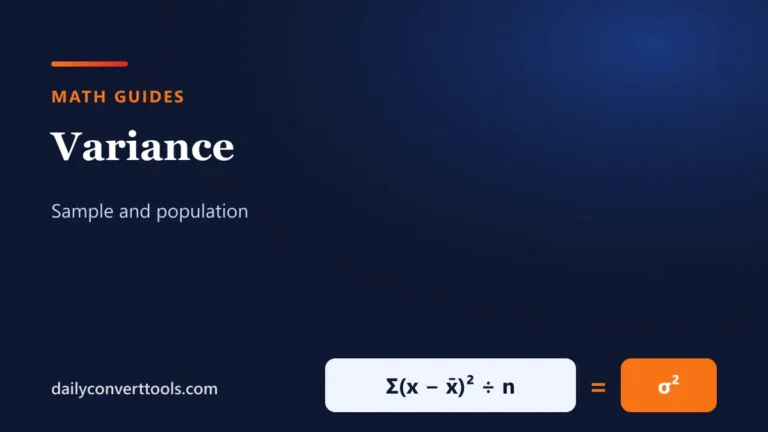
The average squared distance from the mean: population and sample variance step by step, and Excel.
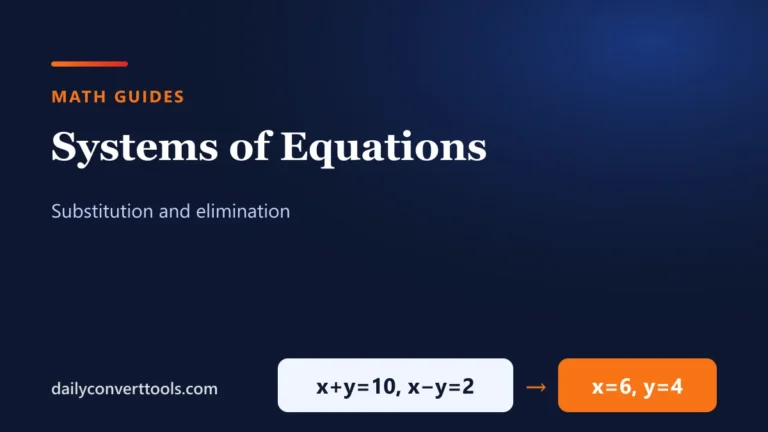
Solve two equations by substitution, elimination or graphing, spot no solution or infinite solutions, plus a word problem.
The bell curve: mean and standard deviation, the 68-95-99.7 rule, the z-score formula, with examples.
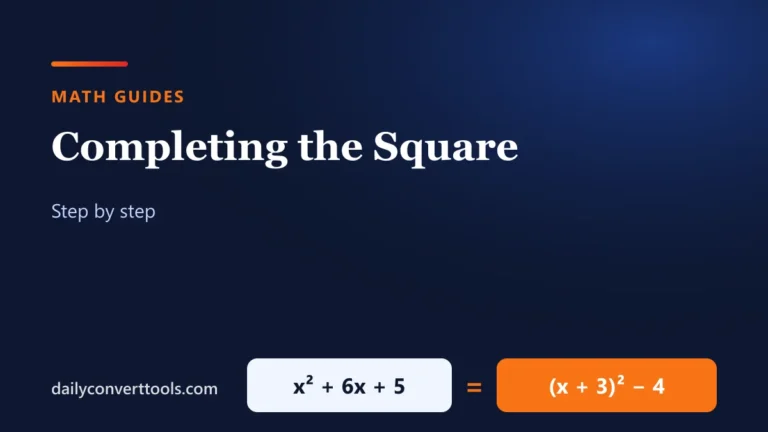
Rewrite x² + bx + c as (x + b/2)² + constant: solve quadratics and find the vertex, step by step.
Rational numbers are fractions of integers; irrational ones, like π and √2, aren’t. How to tell them apart.
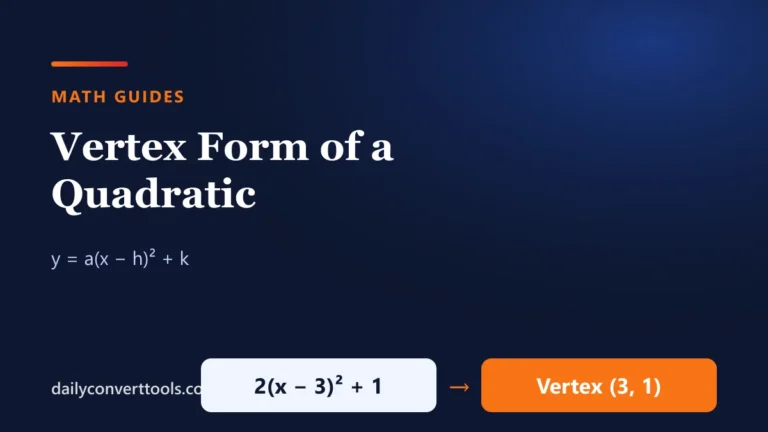
y = a(x − h)² + k with vertex (h, k): read it, graph it, and convert from standard form.
…, −2, −1, 0, 1, 2, …: what integers are, and the sign rules for all four operations.
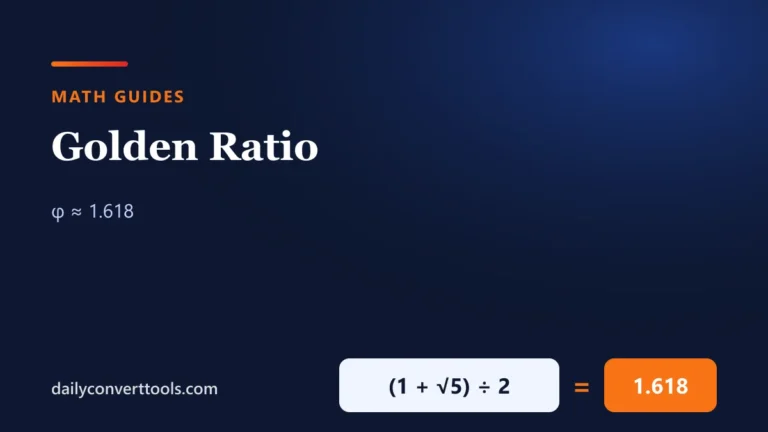
φ = (1 + √5) ÷ 2 ≈ 1.618: where it comes from, the Fibonacci link, design uses, and common myths.
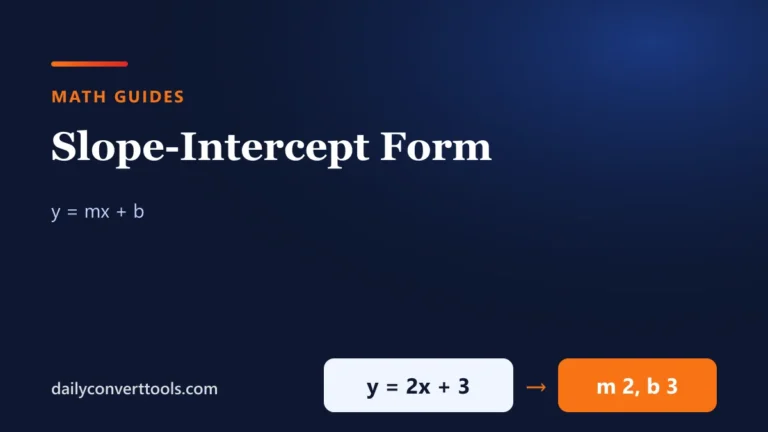
y = mx + b: write, read and graph a line, and convert from other forms, with examples.